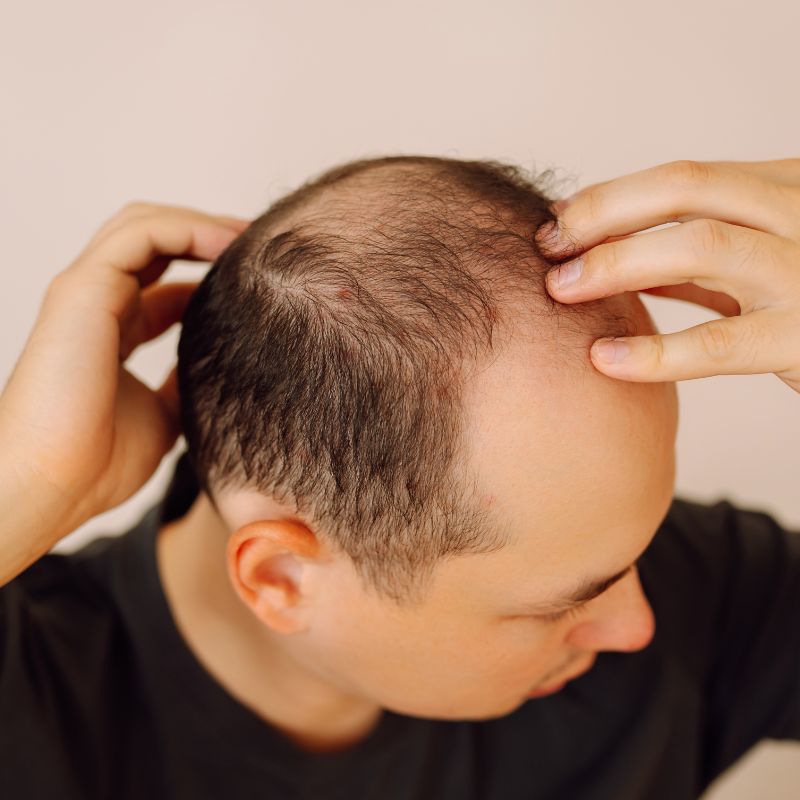
Hair Loss Assessment & Treatment in Tenerife

Hair loss is extremely common and can affect both men and women at almost any age. While losing some hair every day is normal, noticeable thinning, excessive shedding, bald patches or a receding hairline may indicate an underlying condition.

Medical Assessment of Hair Loss & Scalp Conditions

There are many different causes of hair loss. Each of the following can affect normal hair growth:

  • Genetics
  • Hormonal changes
  • Nutritional deficiencies
  • Stress
  • Illness
  • Medication
  • Autoimmune conditions
  • Diseases of the scalp

At Dermatology Center Tenerife, we provide medical assessment of hair loss and scalp conditions to identify the likely cause and determine the most appropriate treatment.

Because different types of hair loss require very different approaches, establishing the correct diagnosis is the first and most important step.

Common Types & Causes of Hair Loss

  • The Problem

Male pattern hair loss, also known as androgenetic alopecia, is the most common cause of progressive hair loss in men.

It typically begins with a receding hairline, thinning around the temples or gradual loss of density at the crown.

The condition is largely influenced by genetics and sensitivity of the hair follicles to androgens, particularly dihydrotestosterone (DHT).

Without treatment, the affected hair follicles may gradually become smaller, producing increasingly thin and short hairs.

  • How We Can Help

We assess the pattern and progression of the hair loss and examine the scalp to determine whether androgenetic alopecia is the likely cause.

If the diagnosis is confirmed, available medical treatment options can be discussed based on the patient’s age, medical history and extent of hair loss.

Early assessment can be useful because treatment is generally aimed at preserving existing hair and slowing further progression.

  • The Problem

Women can also develop androgenetic hair loss.

Unlike the typical receding hairline seen in men, female pattern hair loss often causes a gradual reduction in hair density across the top and central part of the scalp.

The central parting may become wider and the scalp may become increasingly visible.

Hormonal factors, genetics and age can all contribute.

  • How We Can Help

We assess the pattern of thinning and examine the scalp to distinguish female pattern hair loss from other causes of diffuse hair loss.

Depending on the patient’s history and symptoms, laboratory investigations may also be recommended to identify hormonal, nutritional or metabolic factors that could be contributing.

An individual treatment plan can then be discussed based on the findings.

  • The Problem

Some people notice a sudden increase in the amount of hair coming out when washing, brushing or simply running their hands through their hair.

One common cause is telogen effluvium, a temporary disruption of the normal hair-growth cycle.

It can occur several weeks or months after significant physical or emotional stress, illness, fever, surgery, rapid weight loss, pregnancy, nutritional deficiency or other major changes affecting the body.

  • How We Can Help

The timing and pattern of the hair loss are assessed together with recent illnesses, medication, diet, stress and other possible triggers.

When indicated, laboratory testing can help identify underlying deficiencies or medical conditions.

Once the trigger has been identified and addressed, normal hair growth may gradually recover, although this process can take several months.

  • The Problem

Alopecia areata is an autoimmune condition that typically causes sudden, clearly defined patches of hair loss.

It most commonly affects the scalp but can also involve the beard, eyebrows or other areas of the body.

The skin within the affected areas may appear completely normal despite the loss of hair.

  • How We Can Help

We examine the pattern of hair loss and scalp to determine whether the findings are consistent with alopecia areata or another condition.

Depending on the extent and progression of the disease, different medical treatment options may be considered.

Additional investigations can also be recommended when there are signs of associated medical conditions.

  • The Problem

Hair follicles require an appropriate supply of nutrients and are sensitive to changes within the body.

Hair loss may sometimes be associated with conditions such as:

  • Iron deficiency
  • Thyroid disorders
  • Vitamin or nutritional deficiencies
  • Hormonal changes
  • Significant calorie restriction
  • Rapid weight loss

Simply taking supplements without identifying an actual deficiency is not always the correct solution.

  • How We Can Help

Your medical history, diet, symptoms and pattern of hair loss are assessed.

When clinically indicated, blood tests can be arranged to investigate possible nutritional, hormonal or metabolic causes.

Treatment can then focus on correcting an identified underlying problem rather than treating the hair loss alone.

  • The Problem

Healthy hair growth also depends on a healthy scalp.

Inflammatory or infectious scalp conditions can cause itching, redness, scaling, irritation and sometimes hair loss. Possible conditions include:

  • Seborrheic dermatitis
  • Psoriasis
  • Fungal infections
  • Other inflammatory scalp disorders

Persistent scalp inflammation should be assessed, particularly when it is accompanied by noticeable hair loss.

  • How We Can Help

We examine both the scalp and the affected hair to identify signs of inflammation, infection or another underlying skin condition.

Treatment is then directed at the underlying scalp disease.

Controlling inflammation or infection can be important for restoring a healthier environment for normal hair growth.

  • The Problem

Not all apparent hair loss originates from the hair follicle itself.

Repeated tension from tight hairstyles, extensions or certain grooming practices can damage the hair and follicles. This is known as traction alopecia.

Chemical treatments, heat and mechanical damage can also cause the hair shaft to break, creating the appearance of thinning hair.

Long-term traction can eventually cause permanent damage to affected follicles.

  • How We Can Help

We assess whether the reduced hair density is caused by true hair loss, hair breakage, traction or another underlying condition.

Identifying the cause early can help prevent further damage and determine whether medical treatment or changes in hair-care practices are required.

Finding the Cause of Hair Loss

There is no single treatment that is appropriate for every type of hair loss. Before recommending treatment, it is important to understand why the hair is being lost. At Dermatology Center Tenerife, the assessment may include:

01

Medical History

We review when the hair loss started, how quickly it has progressed, previous illnesses, medication, family history, diet and other relevant factors.

02

Hair & Scalp Examination

The pattern and distribution of hair loss are examined together with the condition of the scalp and remaining hair. This can help distinguish between genetic hair loss, excessive shedding, autoimmune hair loss and scalp-related conditions.

03

Laboratory Testing When Indicated

When an underlying medical cause is suspected, blood tests can be arranged. Depending on the individual situation, laboratory investigation may help identify nutritional deficiencies, thyroid abnormalities or other relevant medical factors.

04

Diagnosis & Treatment Plan

Once the likely cause has been identified, an individual treatment strategy can be discussed.

Hair Loss Treatment

Treatment depends entirely on the cause of the hair loss. Depending on the diagnosis, management may involve:

  • Prescription topical treatment
  • Oral medication where medically appropriate
  • Treatment of inflammatory scalp conditions
  • Treatment of fungal or other scalp infections
  • Correction of identified nutritional deficiencies
  • Management of underlying medical or hormonal factors
  • Changes in damaging hair-care practices
  • Monitoring and follow-up

In some cases, further specialist investigation may be required. The objective is to treat the underlying cause whenever possible, reduce further hair loss and preserve existing healthy hair.

When Should You See a Doctor About Hair Loss?

Consider a medical assessment if you experience:

  • Sudden or excessive hair shedding
  • Noticeable thinning of the hair
  • A receding hairline
  • Increasing visibility of the scalp
  • Circular or patchy areas of hair loss
  • Hair loss together with itching, redness or scaling
  • Rapidly progressing hair loss
  • Hair loss following illness or major physical stress
  • Hair loss without an obvious explanation
  • Hair loss that continues for several months

You do not need to wait until hair loss becomes severe before seeking medical advice. Determining the cause earlier may provide more treatment options and can be particularly important for conditions capable of causing permanent hair loss.

Hair Loss in Men & Women

Hair loss can affect both men and women, but the underlying causes and patterns are not always the same.

In men

Men commonly experience androgenetic hair loss affecting:

The temples
The frontal hairline
The crown

In women

Women may experience more diffuse thinning across the central scalp, with a widening central parting and increasing visibility of the scalp.

However, genetic hair loss is only one possibility. Sudden shedding, patchy hair loss or hair loss associated with scalp symptoms may indicate a completely different condition. This is why a medical assessment is more useful than choosing a hair-loss treatment based only on appearance.
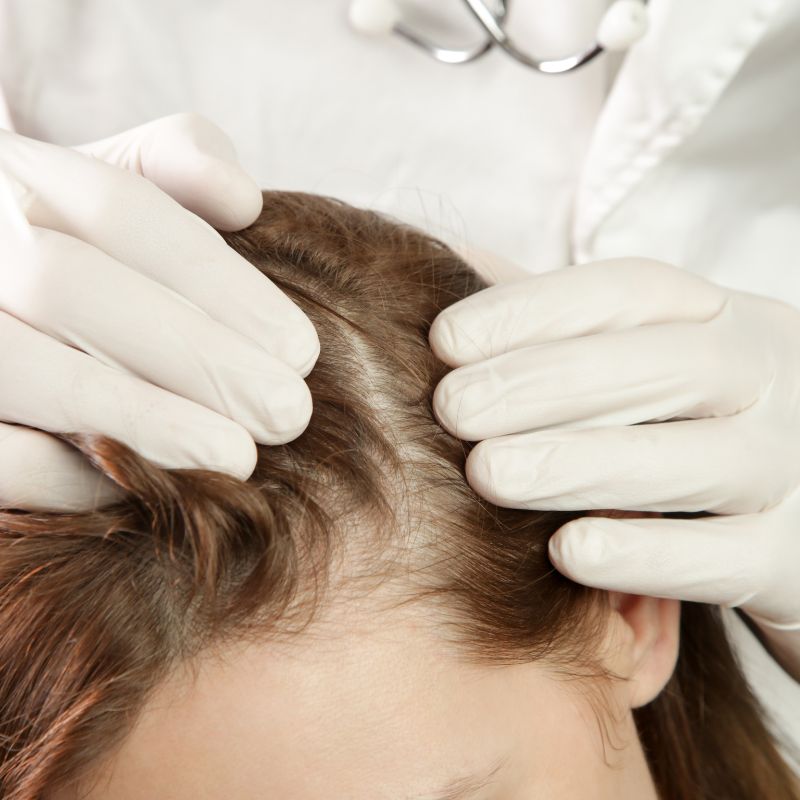
Hair Loss Doctor in Tenerife

If you are experiencing hair thinning, excessive shedding, bald patches or unexplained hair loss, we can help identify the possible cause.

At Dermatology Center Tenerife, we provide medical assessment of hair loss and scalp conditions for both residents and international visitors in Tenerife.

Where appropriate, laboratory testing and additional investigation can be arranged as part of the diagnostic process.

Get Your Hair Loss Assessed in Tenerife

The first step towards treating hair loss is understanding what is causing it.

Arrange a consultation at Dermatology Center Tenerife for a professional assessment and individual treatment plan